You’ve saved up for a special trip, and now you’re stuck at a fork in the road: a tented safari lodge deep in the bush, or a polished luxury hotel with a spa, a rooftop pool and room service. Both promise an unforgettable stay, and both come with a serious price tag, so choosing wrong feels expensive.
This guide breaks down the safari lodges vs luxury hotels decision piece by piece. We’ll look at what each stay actually includes for your money, how the costs and value compare, when to book, and how logistics like transfers and daily schedules differ. We’ll also match each option to different travel styles, because the right answer depends on whether you’re chasing wildlife at dawn or a slow morning with excellent coffee. By the end, you’ll know exactly which stay suits you—or whether a combination of both is the smartest plan of all.
What a Safari Lodge Stay Actually Includes
At first glance, a high-end safari lodge looks expensive. Rates of $600–$1,500 per person per night are typical, but that figure is usually all-inclusive: your game drives, all meals, drinks and guided walks are bundled into the price. Once you add up what a comparable day of activities, dining and drinks would cost elsewhere, the math starts to look very different.
Small camps, personal service
Most safari camps host just 10–20 guests, which changes the whole character of your stay. The staff learn your name on day one, meals are shared around a single table or a private deck, and your guide tailors each drive to what you want to see. Schedules follow the wildlife rather than a fixed timetable—if lions are spotted nearby, breakfast can wait.
What the “rooms” are actually like
Forget conventional hotel rooms. Expect tented or thatched suites, often with canvas walls, wooden floors and wide views over the savanna. Many camps add outdoor showers, and some offer star beds where you literally sleep under the night sky. It’s rustic in style but rarely rustic in comfort—the finishes are usually superb, and the sense of place is something no city hotel can replicate.
What a Luxury Hotel Stay Delivers
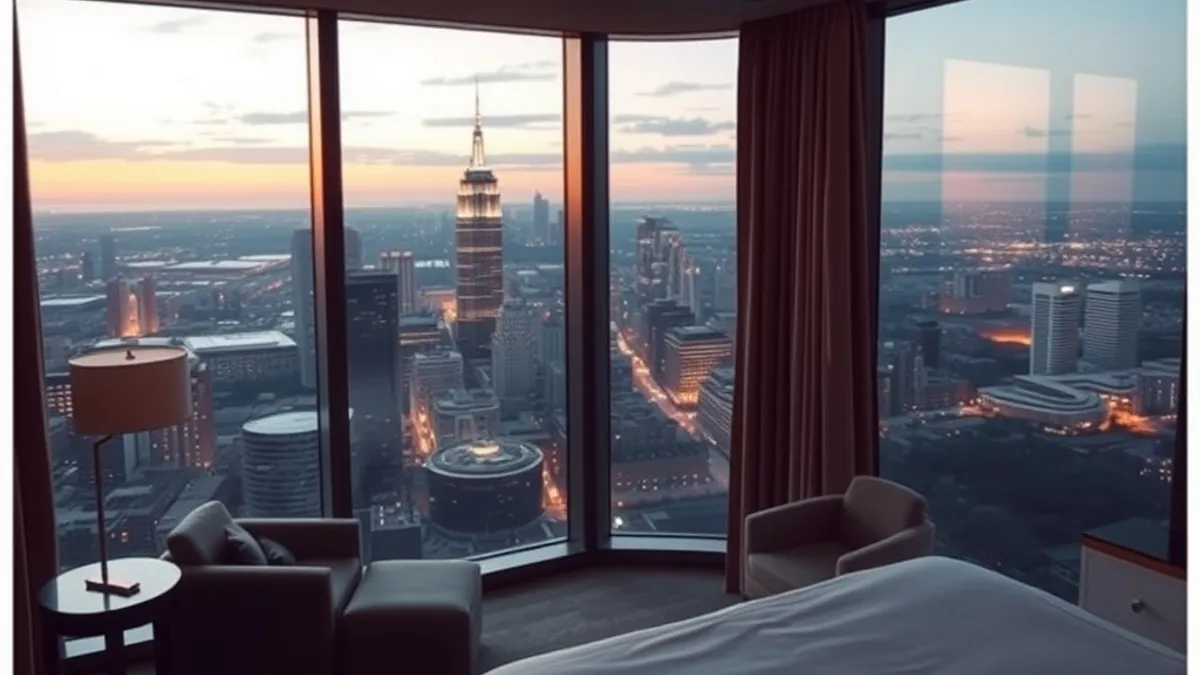
Luxury city and resort hotels typically run $400–$1,200 per night, and that rate buys you an impressive amount under one roof: spas, fine dining restaurants, pools and spacious suites, often with concierge services to match. Everything is designed for comfort, and you don’t need to leave the building to have a full day of eating, swimming and pampering. For a taste of what the top end looks like, see our guide to city hotels with spectacular rooftop infinity pools.
Sealed, climate-controlled comfort
One underrated advantage: hotel rooms are sealed and climate-controlled. If you want predictable comfort with no insects, no dust and no early wake-up calls, a hotel delivers exactly that. Air conditioning, blackout curtains and a proper desk make these stays especially appealing for travelers mixing leisure with work, or anyone who simply sleeps better in an enclosed room.
Freedom to explore on foot
Location flexibility is the other big win. From a well-placed city hotel, you can walk to restaurants, museums and shopping without guided transfers or scheduled departures. Want to skip the hotel breakfast for a neighborhood café, or spend an afternoon wandering galleries? You set the agenda. That independence is the core of what a luxury hotel stay delivers, and it’s the opposite of the structured rhythm of a lodge.
Safari Lodges vs Luxury Hotels on Cost and Value
Comparing sticker prices alone is misleading, because the two options bundle things very differently. A safari lodge rate is typically all-inclusive, covering game drives, meals, drinks and guided walks, so the per-day value can beat a hotel stay plus separately paid excursions. A hotel rate, by contrast, is usually room-only or half-board, and extras stack up quickly on top of the nightly price.
Run a realistic day-by-day comparison before you decide. A hotel stay might look cheaper on paper, but once you add guided tours, restaurant dinners and spa treatments, the gap often narrows or disappears. A few cost factors worth knowing:
- Drinks and laundry: many lodges include soft drinks, house wine and laundry in the rate, while these are frequent add-on charges at hotels.
- Guide and vehicle costs: at a lodge, your game drives come with a professional guide and vehicle at no extra charge; hiring a private guide independently from a hotel can be a significant daily expense.
- Park and conservation fees: some lodge rates cover park entry fees, others don’t—always check what’s included before booking.
- Solo traveler pricing: lodges often charge single supplements that can push a solo trip up sharply, while hotels price per room, which can make them the friendlier option for one.
The takeaway: value depends on how much you’ll actually use what’s bundled. If you plan full days of activities, the lodge’s inclusive model usually wins on cost per experience. If you prefer à la carte freedom and want to control exactly where your money goes, the hotel’s pay-as-you-go structure may suit your budget better. Tally your likely extras for each option, then compare totals rather than nightly rates.
Timing Your Trip: Seasons and Booking Windows
Timing shapes both the price and the experience of your trip. For safaris, the sweet spots are the dry seasons that run June to October and January to February, when animals gather around water sources and vegetation is thin enough to make game viewing genuinely rewarding. If your dream is the Great Migration, aim for July to September, when the river crossings in the Masai Mara and Serengeti are at their peak and enormous herds pile into crocodile-filled water. Photographers tend to favor these months too, since dust and dry grass make wildlife easier to spot and light conditions are often excellent at dawn and dusk.
Booking windows differ sharply between the two stay types. Safari camps are small by design, so a handful of late bookings can empty an entire calendar. Luxury hotels, with far more rooms to fill, rarely sell out as far ahead and often release better rates closer to the date. That flexibility is worth remembering if your travel plans tend to shift at the last minute.
- Book safari lodges 9–12 months ahead for July–October travel. The best-positioned tents, such as those closest to river crossing points, are usually the first to go, so early booking is also how you secure the better views.
- Book luxury hotels 3–6 months ahead for high season. That window is usually enough to lock in a good suite, and you will still find far more last-minute availability than at any safari camp.
- Consider shoulder months if your dates are flexible. The January–February dry season is often easier to book than the July–October rush, giving you strong game viewing with less competition for the same camps.
Comfort, Access and Logistics Compared
Getting to a safari camp is part of the adventure, but it comes with rules. Most camps are reached by light aircraft, with hops that usually take 45–90 minutes from the main gateway airstrips. These small planes enforce strict luggage limits of around 15 kg per person, packed in soft bags rather than hard-shell suitcases, because bags must fit into tight cargo holds.
Getting there: bush flights versus city transfers
Hotels sit near airports and city centers, so transfers are typically short and there are no baggage restrictions to plan around. You can bring the same wheeled suitcase you use anywhere in the world, book a spa slot for your arrival afternoon, and unpack once.
Daily rhythm is the bigger difference once you have arrived. Lodges run on wildlife time: game drives leave at dawn, when predators are most active, and again in the late afternoon through dusk. That means early wake-up calls, pre-breakfast coffee, and quiet hours during the midday heat. Hotels let you set your own pace entirely, whether that means a late breakfast, a long lunch, or a midnight swim. If you struggle with 5 a.m. starts, factor that honestly into your choice.
Which Stay Suits Your Travel Style
The best stay depends less on budget and more on what you want from your days. If the thought of watching a leopard drape itself over a branch beats any rooftop bar, a safari lodge is your answer. Camps hosting just 10–20 guests create an intimacy no city hotel can match: shared meals with fellow travelers, guides who know your name by day two, and nights where the loudest sound is a lion calling across the plain.
When a luxury hotel is the better fit
Choose a luxury hotel if dining, design and wellness facilities are what you travel for. You get multiple restaurants, a proper spa, a pool you can actually use all day, and the freedom to walk out the door and explore museums, markets and shops on your own schedule, no guide or vehicle required.
Many travelers find the ideal answer is both. A split itinerary works beautifully: 4–6 nights on safari for the wildlife immersion, followed by 2–3 hotel nights to decompress, do laundry, sleep in and enjoy good food without an alarm clock. The safari delivers the stories; the hotel gives you the recovery. If your trip is long enough to accommodate both, you rarely regret combining them.
The Bottom Line
So which stay justifies the money? A safari lodge rolls your wildlife experiences, meals and drinks into one all-inclusive price, but it demands commitment: you’ll need to reserve well over a year out for peak season and accept bush logistics. A luxury hotel delivers urban comfort at a lower nightly rate, with easier transfers, flexible booking and none of the dust.
In the end, the choice comes down to one question: is your priority total wildlife immersion, or city-and-resort indulgence? If waking to elephant trumpets beats room service, the lodge wins; if design, dining and freedom matter more, book the hotel. Whichever camp you fall into, tell us in the comments or share this article with a travel partner who’s still on the fence.