Planning a safari in Kenya and scratching your head over lodge prices? You’re not alone. Search online and you’ll find quotes ranging from a couple hundred dollars to several thousand per night, often for stays that sound almost identical. The truth is that the Kenya safari lodge cost depends on a handful of factors that most listings don’t explain clearly.
This guide breaks it all down for 2025. We’ll walk through realistic price ranges for budget, mid-range and luxury stays, show how the season can swing your rate dramatically, and explain exactly what’s included in a nightly rate and what gets billed separately. We’ll also compare prices across Kenya’s main safari regions, look at the difference between lodges, tented camps and luxury camps, and share practical booking tips to help you pay less without cutting corners. By the end, you’ll be able to budget for your trip with real numbers instead of guesswork.
What Does a Kenya Safari Lodge Stay Cost in 2025?
The simplest way to think about safari lodge pricing in Kenya is by tier. At the bottom of the range, budget lodges and camps run roughly USD 100–250 per person per night. These are simple but comfortable properties, often just outside the main parks or in smaller conservancies, with en-suite rooms or basic tents, good meals and shared game-drive vehicles.
Step up to mid-range lodges and you’ll find rates of about USD 250–600 per person per night. This is the sweet spot for most travelers: well-located properties inside or bordering major parks, spacious rooms or upgraded tents, pools, and usually excellent food and guiding.
Luxury stays
At the top end, luxury lodges range from USD 600 to USD 1,500+ per person per night. These properties offer private plunge pools, designer interiors, butler-style service, gourmet dining and often private vehicles for game drives. Some ultra-exclusive camps in prime locations charge well beyond that, but for most travelers the three tiers above cover the realistic options. Keep in mind these figures are per person, not per room, which trips up a lot of first-time planners.
How the Season Changes Your Kenya Safari Lodge Cost
Timing is the single biggest lever on your lodge bill. July to October is peak season, when the Great Migration fills the Maasai Mara and lodges charge their highest rates of the year. Rooms in prime locations sell out months in advance, and there’s little discounting to be found. If the migration is your priority, lock in your dates early and expect to pay a premium for the privilege.
On the other end, April to May brings the long rains, and prices drop by 30–40% at many properties. Wildlife viewing is still good, though roads can get muddy and some camps close for refurbishment during this window. If you don’t mind a bit of mud on your boots, this is when a mid-range lodge can feel like a bargain.
- July to October: The wildebeest herds cross between the Serengeti and the Maasai Mara, so river-crossing sightings are possible, but expect the year’s highest rates and the most vehicles around popular sightings.
- April to May: The landscape turns lush and green, which photographers love, and newborn animals are everywhere, though afternoon downpours can interrupt game drives.
- January to March: A warm, dry spell with excellent visibility for spotting predators, and rates sit well below peak levels.
- June: The rains have ended, the bush is drying out, and lodges are quieter before the migration crowds arrive, making it one of the savviest months to book.
If your dates are flexible, the shoulder seasons of January to March and June deliver solid value: good weather, thinner crowds and noticeably lower rates than the migration months. Many travelers find these windows offer the best overall balance of price and experience. Before you commit, compare a few dates across seasons and see how the same lodge prices out—the difference can fund extra nights or an upgrade.
What’s Included (and Not Included) in the Nightly Rate
Before you compare quotes, make sure you know what a nightly rate actually covers. Most safari lodge rates are quoted per person sharing, and they typically include all meals plus two daily game drives in the lodge’s own vehicles with a professional guide. That means your accommodation, food and wildlife viewing are bundled into one number, which is why safari rates look high at first glance but often replace several separate expenses.
What usually costs extra
A number of items are billed separately at most properties. Park and conservancy fees are the big one, and they can add a meaningful amount per day, so always check the current rate for the parks on your route. Drinks beyond tea and coffee at meals, laundry, spa treatments, and internal flights between Nairobi and the bush are also commonly charged on top.
All-inclusive packages exist and trade a higher upfront price for fewer surprise charges, covering drinks and sometimes other extras in one rate. They make sense if you plan to enjoy sundowners and evening drinks nightly, but if you’re a light drinker, a standard full-board rate may work out cheaper. Either way, ask for a written breakdown of what’s included before you book, so the final bill holds no surprises.
Price Differences Between Kenya’s Safari Regions
Where you choose to safari in Kenya has a big impact on your nightly rate. The Maasai Mara sits at the top of the price range, with lodges there typically charging more than comparable properties elsewhere in the country. During the Great Migration months, when the wildebeest herds fill the plains, demand surges and even mid-range camps price closer to luxury levels. If the Mara is on your list, expect to pay a premium for a spot near the main crossing points.
Amboseli and Tsavo offer a friendlier middle ground. Both parks deliver strong wildlife viewing — Amboseli is famous for its large elephant herds with Kilimanjaro as a backdrop, while Tsavo’s vast landscapes mean fewer vehicles at a sighting. Lodges and camps in these regions often fall into the mid-range bracket, making them a smart pick if you want quality game viewing without Mara-level prices.
Why private conservancies cost more
Properties in private conservancies bordering the Mara and other reserves usually charge a higher nightly rate than lodges inside the public parks. What you get for that extra cost is exclusivity: game drives restricted to a handful of vehicles, the ability to go off-road for closer sightings, and activities such as night drives and guided walks that are not permitted in national reserves. For many travelers, the crowd-free experience justifies the difference — but factor the conservancy fees into your total, as these are typically billed on top of the nightly rate.
Lodge, Tented Camp or Luxury Camp: Choosing Your Stay Type
One of the biggest factors in what you’ll pay per night isn’t the region or the season — it’s the type of property you book. In Kenya, safari accommodation generally falls into three categories: permanent lodges, classic tented camps, and luxury tented camps. Each comes with a different price tag and a very different feel on the ground.
Permanent brick-and-mortar lodges, the kind with solid walls, pools and often larger dining areas, tend to sit at the lower end of the price spectrum. Because they can host more guests, their nightly rates are typically friendlier to tighter budgets. They’re a solid choice if you want comfort and reliable amenities without paying a premium.
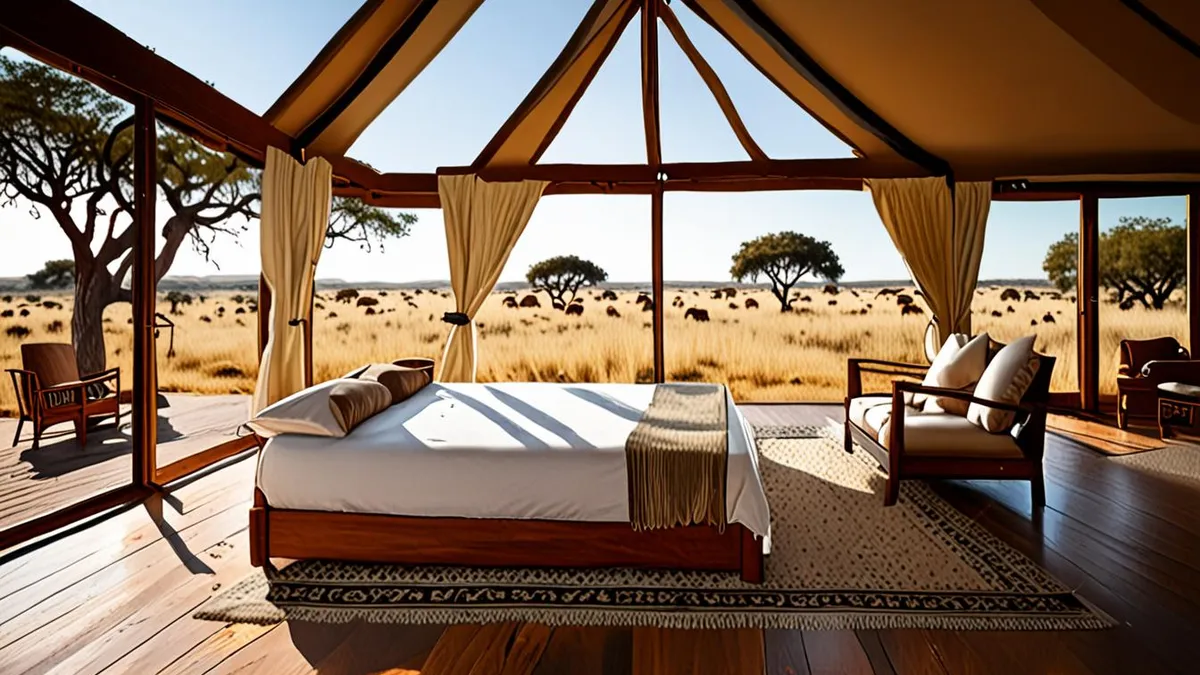
Luxury tented camps sit at the opposite end. These are small, often with a dozen tents or fewer, and they charge the highest per-night prices for good reason: spacious canvas suites, private decks, thoughtful design and a level of personal attention you won’t find at a bigger lodge. Many also sit on private land, which shapes the quality of your game drives as much as the price.
- Guest numbers affect game-drive quality. Smaller camps usually carry fewer vehicles per sighting, so you’re less likely to share a lion sighting with a dozen other jeeps.
- Tented doesn’t mean roughing it. Even mid-range tented camps typically offer proper beds, en-suite bathrooms and hot showers — the canvas is about atmosphere, not sacrifice.
- Exclusivity scales with intimacy. A small camp means shared meals with the same few guests and guides who learn your interests, which changes the whole rhythm of your stay.
- Location often follows price. Higher-end camps frequently occupy private conservancies or prime riverfront positions, while budget lodges may be farther from the main wildlife action.
How to Book a Kenya Safari Lodge at the Best Price
Getting a good price on a Kenya safari lodge is less about luck and more about timing and a bit of homework. The same lodge can charge very different rates depending on when you book, when you travel and how you read the quote. Here is a practical way to approach it.
- Book 6–12 months ahead for peak-season travel. If you want July to October dates, secure your lodge early. Popular lodges in the Maasai Mara fill up well in advance, and rates tend to rise as availability shrinks. Booking early locks in the price before peak-season pricing kicks in.
- Consider the green season. Traveling during the April to May long rains can cut 30–40% off nightly rates. Yes, there may be afternoon showers, but wildlife is still there, the landscapes are lush and the lodges are quieter. For budget-conscious travelers, this is often the single biggest saving available.
- Compare per-person versus per-room quotes. Kenyan safari lodges usually price per person sharing, so a quote that looks cheap may double once you add a second traveler, while a per-room rate may already cover two people. Always ask which basis the quote uses and calculate the true total for your party before comparing lodges.
- Ask what the rate includes. Meals and game drives are often bundled in, but park fees, drinks and transfers may not be. Getting this in writing helps you compare like for like.
A few emails and a flexible calendar can save you hundreds of dollars per night. Start early if your heart is set on the migration months, or lean into the green season if savings matter more than perfect weather. Either way, knowing exactly what your quote covers is what keeps the final bill from surprising you.
Wrapping Up: Budgeting for Your 2025 Kenya Safari Lodge Stay
So, what will a Kenya safari lodge stay actually set you back in 2025? Expect entry-level lodges and camps to start around the low hundreds per person per night, mid-range properties to sit comfortably in the middle of that spectrum, and top-end luxury lodges to run well beyond that. If online quotes have seemed wildly inconsistent, it’s usually because they’re comparing different seasons and different stay types rather than apples to apples.
Season is the biggest lever on price. Peak months around the Great Migration command the highest rates, while the long rains can trim a significant chunk off the nightly cost. Booking well ahead for peak travel and checking exactly what’s included in each quote will keep your budget predictable. Have a question about planning your own Kenya safari, or a lodge stay worth sharing? Drop a comment below or pass this article along to a fellow traveler.